
Key Regulatory Documents and Dates
Ionizing Radiation and Radiation Protection
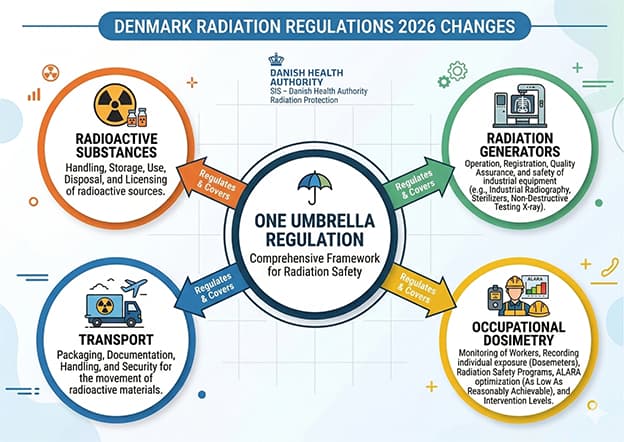
Think of this as the umbrella rule set that defines the “how” of radiation protection in Denmark. It sets the general framework for responsibilities and core radiation protection principles, including:
- Justification and optimization (ALARA)
- Dose limits and dose management concepts
- Worker and area classification concepts
- Monitoring expectations and program governance
- Use of qualified personnel and structured oversight
What this means in practice
What this means in practice
What this means in practice
What this means in practice
What this means in practice
What this means in practice
What this means in practice
Even if company/organizational radiation protection programs are already mature, the updated structure is a good reason to re-map your compliance artifacts (training, procedures, safety assessments, monitoring plans, surveys, audits) to the new system so nothing is missed during inspections or renewals.

Radiation Generators
The radiation generator requirements for industrial and imaging operators will have the most practical impact.
What are the updates?
- Clearer separation between activities that require a permit and activities that may operate under notification
- Stronger expectations for documentation and controls
- Defined maximum time intervals for periodic checks and radiological controls (depending on the type of use and authorization pathway)
Organizational Next Steps
Determine whether company requirements fall under a permit or a notification
Update inspection and QC calendar to align with the maximum intervals
Ensure service reports and radiological checks are archived in a way that supports quick retrieval during an inspection
Radioactive Materials
The radioactive materials/substances executive order affects research users, industrial gauges, nuclear medicine and radiopharmaceuticals, sealed source users, and anyone handling radioactive waste.
What are the updates?
- Clearer lifecycle expectations across receipt, storage, use, transfers, and disposal
- Formalized security concepts for higher-activity material (including more structured planning and oversight based on risk)
- Transition timelines for certain competency-related roles and requirements
Organizational Next Steps
Confirm your inventory controls and leak test/service documentation are complete and current
Review storage and access control practices for higher-activity sources
Update emergency and incident-response documentation so it matches your current operations

Transporting Radioactive Materials
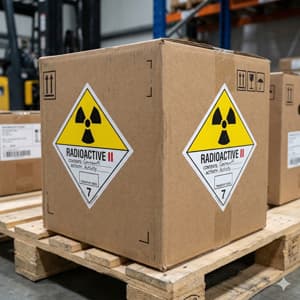
If you ship or transport Class 7 in Denmark, the updated transport executive order deserves special attention. This EO aligns Denmark’s approach with the international transport frameworks by mode (road, rail, sea, air) and clarifies authority and responsibilities.
What are the updates?
- Transport requires a permit to the extent defined in the executive order, with documentation expected to be available during transport
- A radiation protection program must be designed and implemented prior to first transport
- The order lays out shipper and carrier responsibilities before transport, including ensuring appropriate authorizations and the presence of required documentation
- A transition deadline applies for organizations that previously had transport “included” under older authorizations, requiring an application for a separate transport permit by July 1, 2026
Organizational Next Steps
Determine whether you need a dedicated transport permit under the updated framework
Update or create your radiation protection program for transport operations
Align internal shipping procedures with the mode-specific rules you actually use
Confirm your “receiver authorization check” process is formal and repeatable
Conclusion
Denmark’s 2026 radiation regulatory update brings a more organized and consistent framework for managing ionizing radiation activities. While the core principles of radiation protection remain the same, the new structure clarifies expectations around authorization, documentation, monitoring, and operational oversight for radiation generators, radioactive materials, and transport activities. Organizations that take time to review the new executive orders, align their procedures, and confirm their compliance documentation will be in a stronger position as the transition deadlines approach. Staying proactive now will help avoid administrative issues later and ensure radiation safety programs continue to meet Denmark’s updated regulatory standards.
Write your awesome label here.
Get Our Free Denmark Radiation Regulations 2026 Compliance Checklist!
By downloading this free checklist you will learn to:
Thank you!

Empowering industries with expert radiation safety training, consulting, and compliance solutions.
© 2026 IRSC, Inc. All rights reserved.
Powered By H3A