Radiation Safety Training for Manufacturing Workers

Manufacturing facilities that use radiation-emitting equipment or radioactive sources must meet strict NRC and Agreement State regulatory requirements. If your facility operates this type of equipment, you need radiation safety training that manufacturing workers can rely on, documentation that satisfies NRC and Agreement State auditors, and a program built around the equipment your team uses. IRSC has delivered that for industrial and manufacturing organizations for over 20 years.

Protecting Manufacturing Workers From Radiation Hazards

";
Workers who operate X-ray inspection systems, handle sealed source gauging devices, or work near irradiators face radiation exposure that general safety briefings don't address. They are also required by regulation to complete documented, equipment-specific radiation safety training. This isn't optional. NRC and Agreement State regulations mandate that workers who operate or work near radiation-emitting equipment receive proper training before they do so, and that training must be documented and defensible during an audit. Effective compliance starts with understanding what each piece of equipment does and what regulatory requirements attach to it. IRSC builds radiation safety training programs around your specific operations so your workers are protected, your documentation is audit-ready, and your facility stays compliant.
; "; ;

Radiation Sources and Equipment Common in Manufacturing Facilities

Manufacturing facilities use a wider range of radiation-emitting equipment than most people outside the industry realize. IRSC provides regulatory support and radiation safety training for:

Cabinet X-ray and industrial CT systems used in quality control and inspection
Thickness, density, and process monitor gauging devices
X-ray fluorescence (XRF) analyzers
Irradiators and liquid scintillation counters
Lead paint detectors and other analytical instruments

If your facility operates any of this equipment under an NRC or Agreement State license or registration, your radiation safety program has to keep pace with your license conditions.

Manufacturing Sectors IRSC Works With

Manufacturing is not one industry. It is dozens of distinct operations, each using radiation-emitting equipment in different ways and under different license conditions. IRSC provides radiation safety training and compliance support tailored to how your facility actually operates.

Electronics Manufacturers

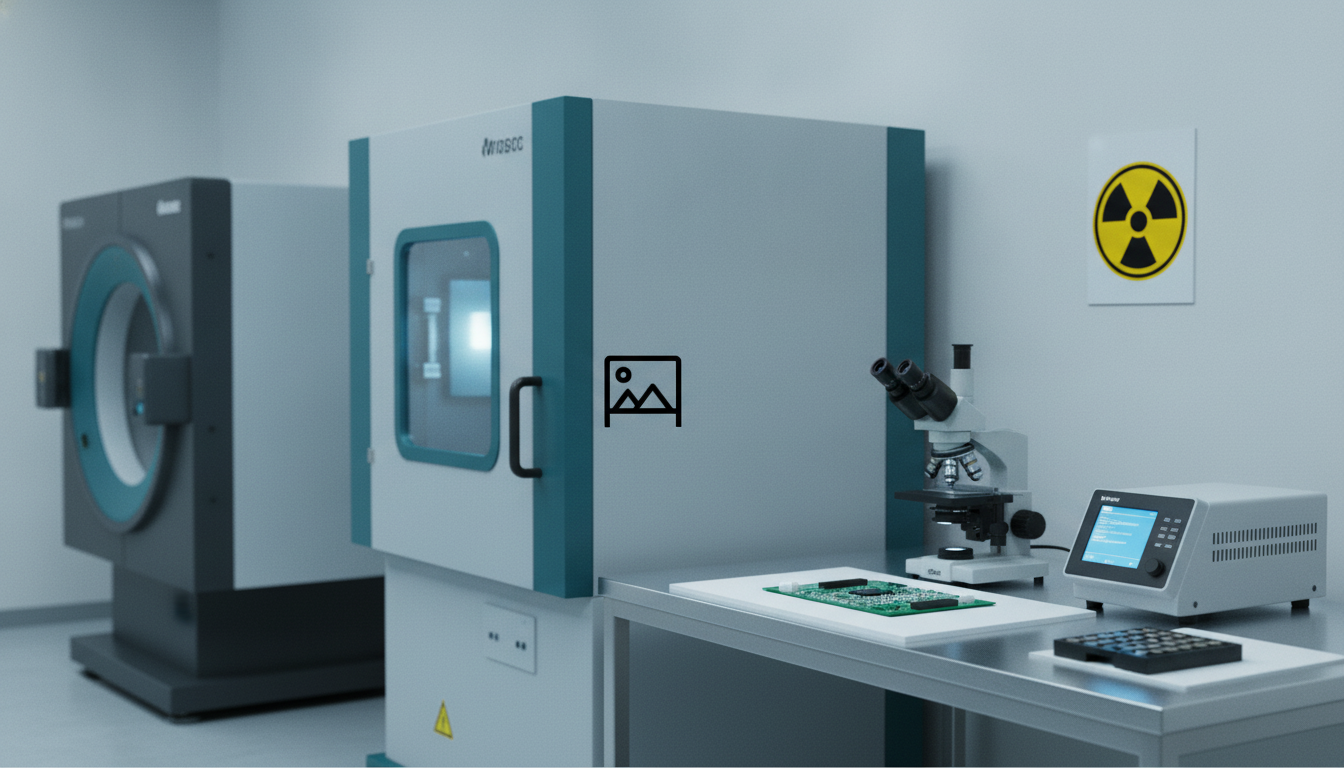
Electronics facilities rely on cabinet X-ray systems and industrial CT for PCB inspection, solder joint verification, and component quality control. XRF analyzers are used to verify material composition and RoHS compliance. Each of these applications carries licensing or registration and worker training requirements that a general EHS program is not built to address. IRSC builds radiation safety programs around the equipment your team operates on the floor every day.
electronics quality lab scene featuring cabinet X-ray, industrial CT, PCB inspection, and an XRF analyzer.

Injection Molding Operations

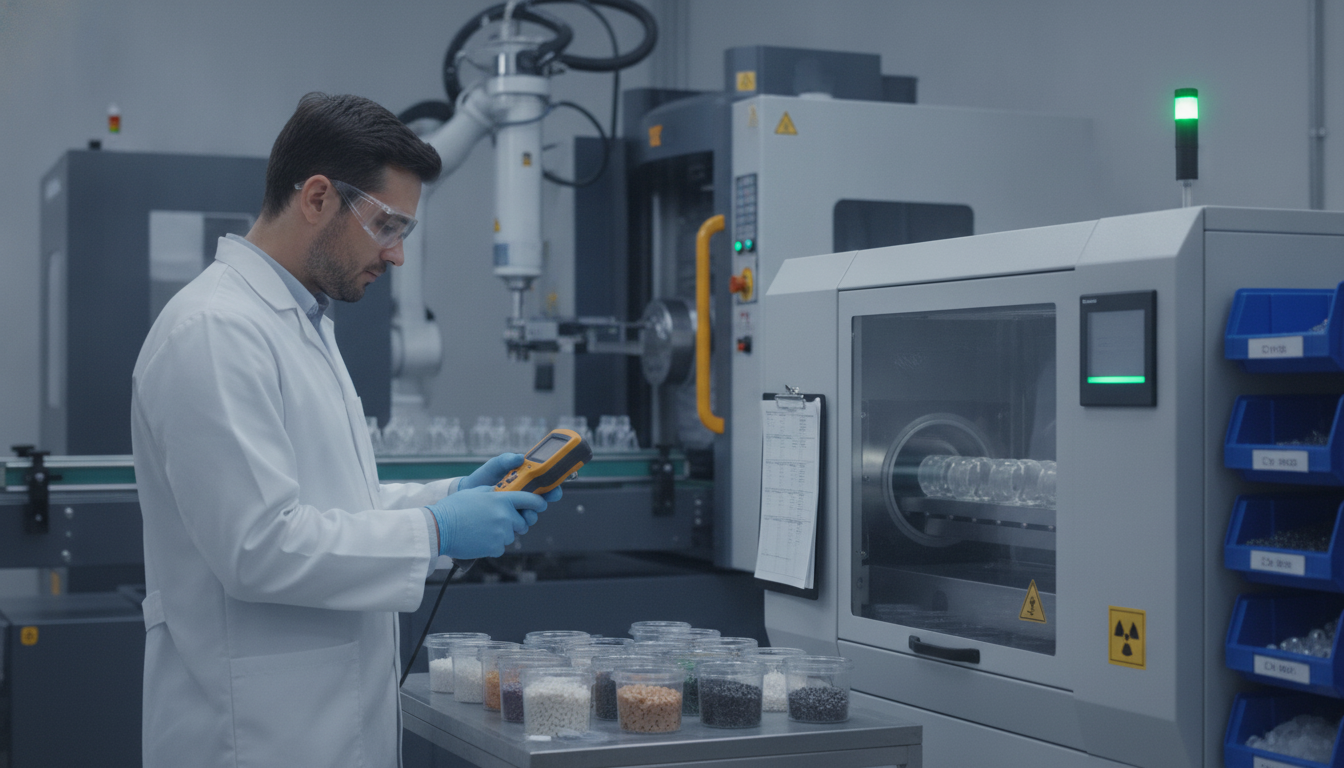
Injection molding facilities use XRF analyzers to test raw material composition and verify pigment and additive content in plastic compounds, and may use X-ray inspection systems for quality control on finished parts. These instruments are subject to NRC and Agreement State regulations regardless of how infrequently they are used. Industrial CT systems are also used for quality control in the manufacturing of prototypes. IRSC helps injection molding operations identify which regulatory requirements apply to their specific inventory and build programs that satisfy them.
16:9 injection molding facility scene featuring XRF raw material testing and X-ray inspection for finished parts.

Paper Production Facilities

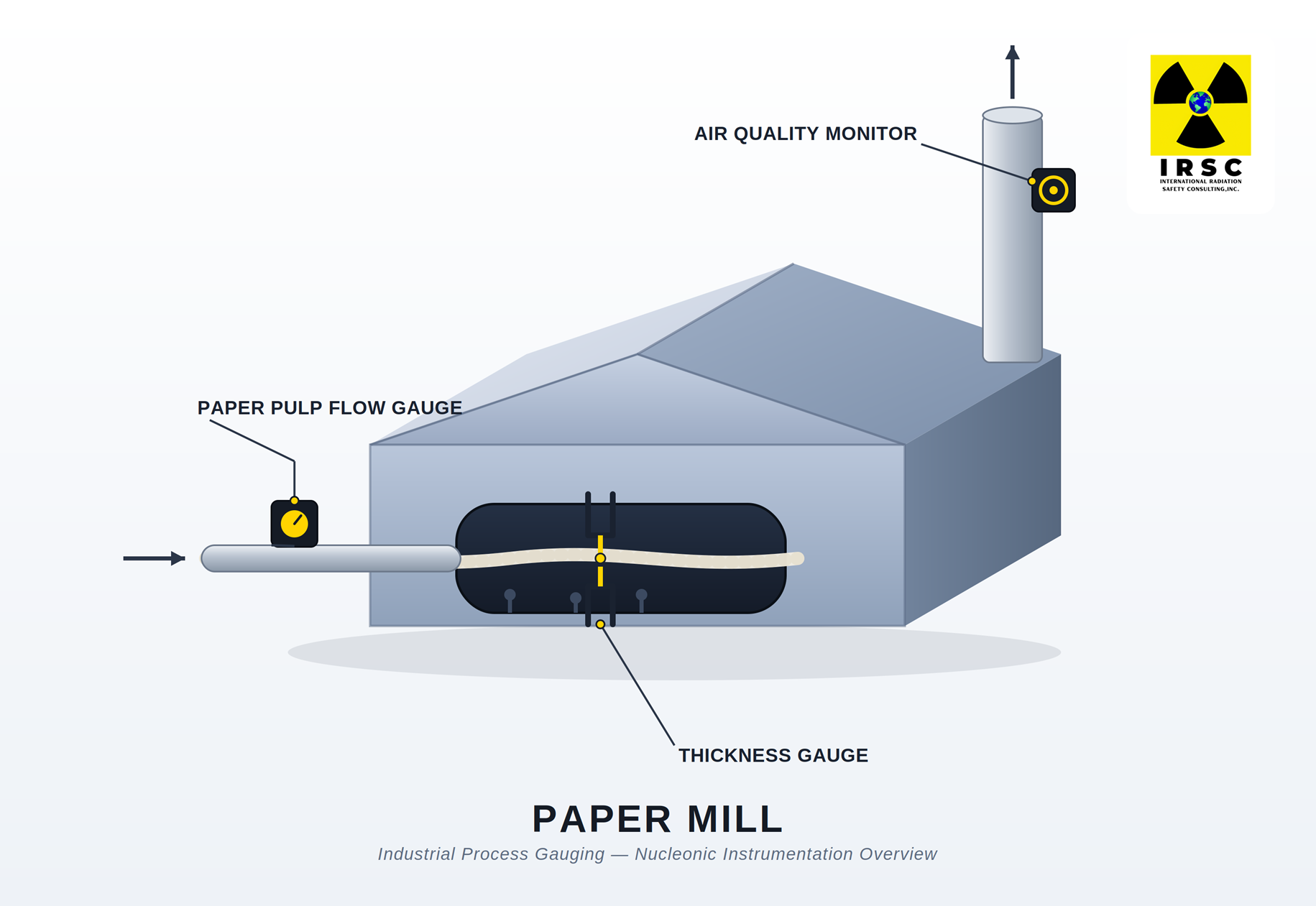
Paper mills rely heavily on sealed source gauging devices to continuously monitor and measure across production. These include pulp quality gauges used during the early stages of production, beta gauges that measure paper thickness and basis weight during manufacturing, and air quality gauges that monitor environmental conditions throughout the facility. These sealed radioactive sources require specific license conditions, source inventory controls, periodic testing, and trained personnel who understand what they are working with. IRSC has built radiation safety programs for paper production facilities operating under NRC and Agreement State licenses, including RSO training designed for the gauging devices your line depends on.
paper mill sealed source gauging, showing a paper web/roller line with a compact beta gauge measurement unit and clean industrial controls.

Automotive Manufacturers

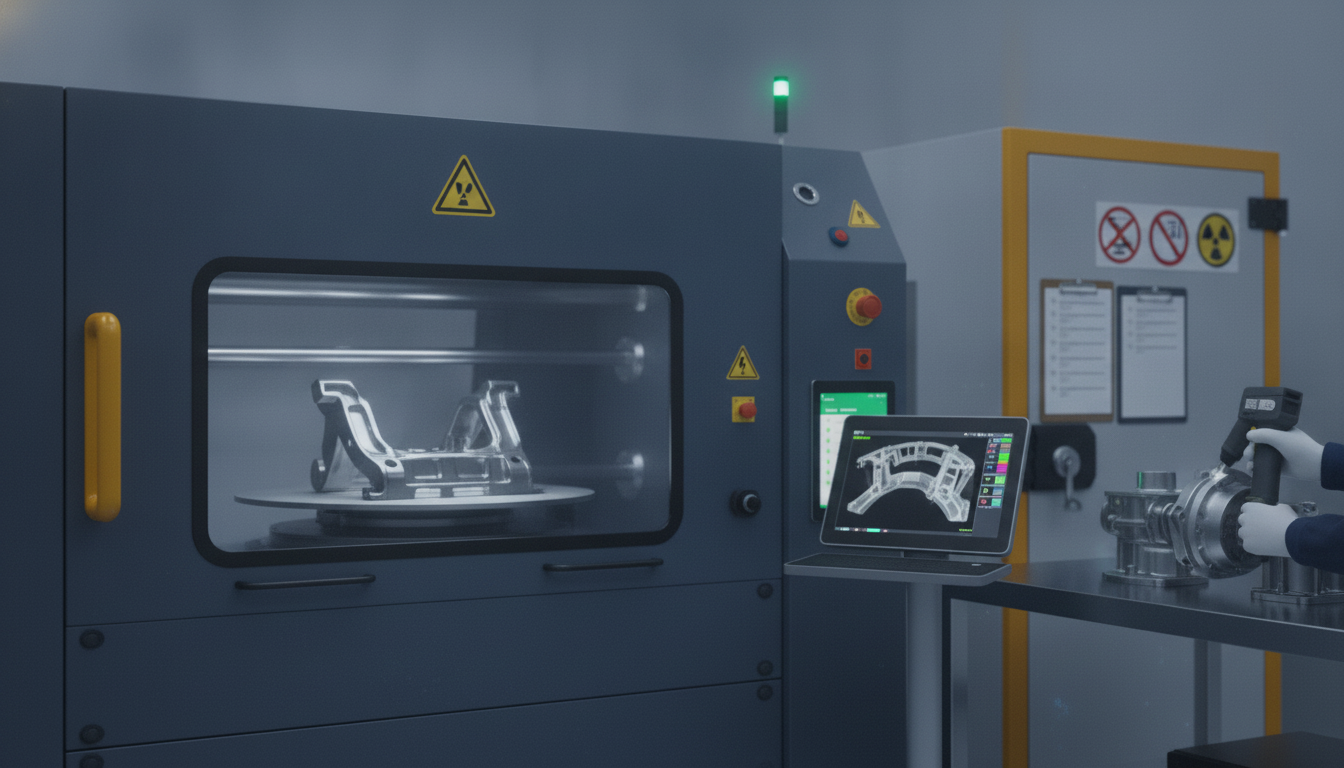
Automotive facilities use industrial X-ray and CT systems for non-destructive testing of welds, castings, and structural components. XRF analyzers are used to verify material composition in metal parts and coatings. These systems operate under strict regulatory requirements, and automotive facilities face the same NRC audit exposure as any other licensed manufacturer. IRSC provides worker training, RSO support, and compliance documentation built around the inspection equipment your quality team uses.
automotive quality inspection bay featuring industrial X-ray/CT NDT equipment and a handheld XRF material analyzer.

Regulatory Compliance Requirements for Manufacturing Licensees and Registrations

Manufacturing licensees carry compliance obligations well beyond posting warning signs. OSHA's 29 CFR 1910.1096, or state equivalent, requires employers to instruct workers on radiation health protection and exposure minimization. NRC and Agreement State regulations govern your license conditions, source control, dosimetry requirements, and audit readiness.

Radiation safety consulting for manufacturing organizations is a core part of what IRSC does. We help you identify the requirements that apply to your equipment and operations and build programs that satisfy them to stay ahead of inspections rather than react to them.

RSO Training for Manufacturing

Your Radiation Safety Officer (RSO) carries responsibility for your entire program, so RSO training for manufacturing must include: 

  • License compliance
  • Worker training
  • Recordkeeping
  • Source inventory
  • Representing your facility when regulators arrive

IRSC's 40-Hour RSO Program

Our program covers NRC and Agreement State regulatory requirements, program management, ALARA implementation, and audit preparation. As an online radiation safety course for the manufacturing industry, it's self-paced, so EHS managers and safety professionals can complete certification without stepping away from operations for a week. Live Web Sessions or Corporate Training are available for teams that prefer direct instructor interaction.

Frequently Asked Questions

Our facility only uses generally licensed gauging devices. Do we still have compliance obligations?

Yes. Generally, licensed devices don't require a specific NRC or Agreement State license, but they carry regulatory obligations including proper use, periodic testing, disposal requirements, and recordkeeping. Many states now require general licensees to register their devices upon receipt. IRSC can help you determine exactly what applies to your inventory.

Can an online RSO course satisfy NRC training requirements for our license?

Yes, when the course content meets regulatory requirements, and completion is properly documented. IRSC's online radiation safety course is built to NRC and Agreement State standards and provides completion documentation that references the regulations covered, training hours, and instructor credentials, which is exactly what license conditions and auditors require. Our RSO course has been available online since 2020 and has been widely accepted by the NRC and all Agreement States.

What does an NRC inspector typically look for when auditing a manufacturing facility?

Inspectors check whether your program matches your license conditions. That means verifiable worker training records, current source inventory and accountability documentation, evidence that dosimetry is being monitored and evaluated, and an RSO who can speak to the program with confidence. The most common findings involve gaps between what written procedures say and what records show.